


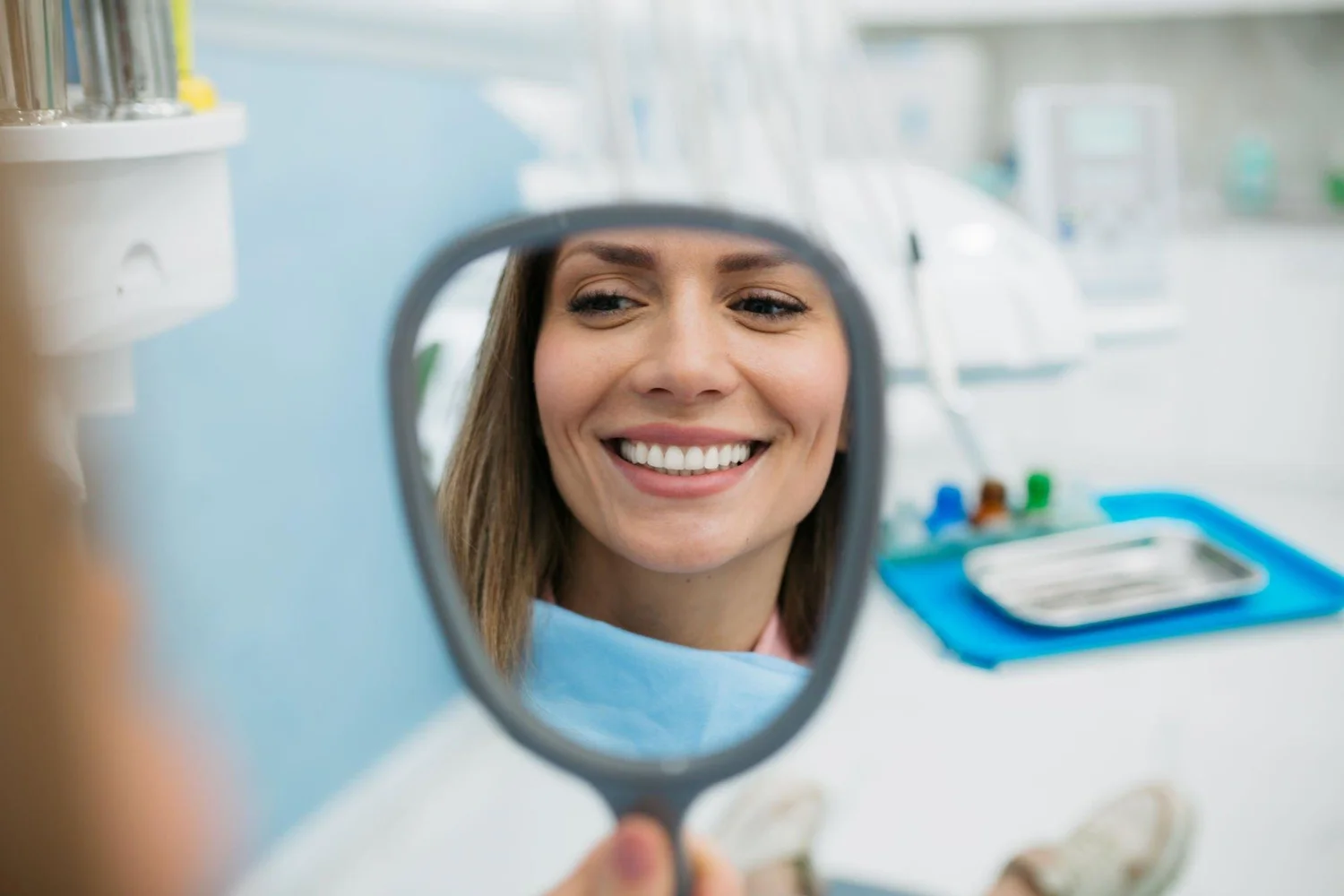
When performed under a dentist’s guidance, teeth whitening can be safe for patients with sensitive teeth. In-office professional whitening and take-home trays are both viable options, and each can be adjusted to accommodate sensitivity levels. A dentist may assess the cause and severity of sensitivity before recommending the most appropriate approach. Here is more information on what causes tooth sensitivity and how teeth whitening works:
What Are Sensitive Teeth?
Sensitive teeth occur when the protective enamel layer wears down or when the gums recede and expose the underlying dentin. Dentin contains microscopic tubules that lead directly to the tooth’s nerve. When these tubules are exposed, hot, cold, or acidic substances can trigger sudden, sharp pain. Exposure is the core issue. Tooth sensitivity has several common causes; these include aggressive brushing, acid erosion, gum disease, and teeth grinding. Patients with sensitive teeth can still undergo procedures such as teeth whitening to improve their smile’s appearance.
What Is Teeth Whitening?
Teeth whitening is a cosmetic dental process that removes surface stains and lightens the natural color of teeth. Whitening treatments use peroxide-based agents, such as hydrogen peroxide or carbamide peroxide; these agents break down discoloration at the molecular level. When peroxide penetrates the enamel, it reacts with stain molecules, breaking them into smaller, less visible particles.
Whitening treatments vary in strength, application method, and duration. Stronger formulas typically produce faster results, but they may carry a higher risk of sensitivity. Milder options work more gradually with less irritation. Because sensitive teeth respond differently to whitening agents, choosing the right concentration and delivery method affects how the whitening process feels.
What Are the Available Options?
Patients with sensitive teeth generally have two primary options for professional whitening: in-office treatments and take-home trays. A dentist performs in-office professional teeth whitening using a high-concentration whitening gel, and this is often paired with a special light to speed results. Because the procedure takes place in a controlled setting, dentists can make real-time adjustments if sensitivity develops during the session. Patients can communicate any discomfort as it arises.
Take-home teeth whitening trays are created from a dentist’s mold of the patient’s teeth, and they hold a lower-concentration whitening gel against the teeth for a set period each day. The concentration is milder, so the risk of sensitivity is generally lower, though results may take longer to appear. Starting with shorter treatment times before gradually increasing exposure may help with sensitivity.
What Are the Benefits?
Professional supervision offers several advantages for patients with sensitive teeth, including:
- Tailored formulas: Dentists can select concentrations based on a patient’s specific sensitivity level.
- Predictable, even results: Professional whitening may produce more consistent outcomes compared to over-the-counter alternatives.
- Ongoing monitoring: Dentists can assess enamel health throughout the process and pause treatment if irritation develops.
This level of clinical oversight allows patients to pursue a whiter smile without compromising dental health.
Consult a Dentist Today
Understanding the cause of sensitivity, along with the available whitening options, helps patients make informed choices about their dental care. In-office professional whitening and take-home trays both offer options for whiter teeth, and each has adjustable concentrations. If you are seeking more information about this treatment, schedule a consultation with a dentist. A dentist can assess the underlying cause of sensitivity, recommend the safest whitening method, and monitor progress throughout the process.
