


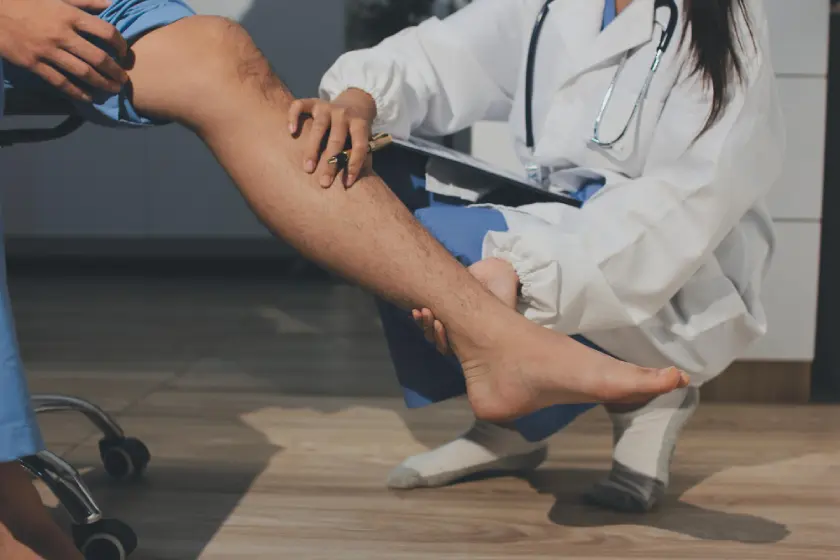
Poor circulation in the legs and lower extremities often points to underlying cardiovascular problems. When blood struggles to flow properly through the veins, it may signal conditions such as venous insufficiency, peripheral artery disease, or blood clots. These issues can affect how well your body delivers oxygen and nutrients to your tissues. To diagnose venous concerns, doctors typically start with a physical exam and a review of your symptoms, but they may also order other screenings tests to give an accurate diagnosis. Here’s information on the different treatment options for poor circulation in legs:
Managing Poor Circulation in Legs
Managing poor circulation starts with identifying the root cause and addressing it early. Depending on the diagnosis, treatment may include lifestyle adjustments, medication, compression therapy, or specialized wound care. A tailored approach helps address both the circulation problem and any related symptoms. Left unmanaged, poor circulation in legs can worsen over time, so timely care is invaluable. Doctors focus on improving blood flow, reducing discomfort, and preventing complications like swelling, skin changes, or open wounds.
Getting Timely Wound Care
When conservative and at-home treatments don’t improve blood flow, a specialist will discuss other solutions to improve poor circulation in the legs. Venous wounds, also called venous ulcers, are open sores that usually develop on the lower legs. They occur when weakened or damaged veins allow blood to pool, increasing pressure and breaking down the surrounding skin. These wounds tend to heal slowly and can become infected without proper medical attention. Wound care specialists manage venous and other types of wounds using several methods.
They may prescribe antibiotics to treat or prevent infection, and they often apply compression bandages or stockings to improve blood flow and reduce swelling. Ointments can support the skin and create a favorable healing environment. Specialists may also perform debridement, a process that removes dead skin or debris from the wound to encourage new tissue growth. General wound cleaning is a routine part of care, helping keep the area free of bacteria and supporting steady healing.
Utilizing Advanced Wound Therapy
Advanced wound therapy includes specialized techniques used when standard treatments don’t produce enough positive progress. Doctors often recommend these therapies for wounds that are large, deep, or slow to heal despite ongoing care. This approach can also help patients with complex circulation issues that make recovery more difficult. Before suggesting an advanced option, a specialist will evaluate the wound and your overall health.
Several advanced treatments may be part of a wound care plan. Negative pressure wound therapy uses a sealed dressing connected to a vacuum device, which draws fluid away from the wound and may support tissue repair. Non-contact, non-thermal ultrasound debridement, known as ultraMIST, delivers low-frequency sound waves through a fine mist to clean the wound without direct contact.
For more severe or deeper wounds, total contact casting involves applying a specialized cast that redistributes pressure away from the wound. This method is often used for wounds on the foot where offloading is fundamental. Each treatment has a specific purpose, and specialists choose one or a combination based on the wound’s location, size, and condition.
Visit a Wound Care Specialist
Poor leg circulation can affect your daily comfort and overall health, so seeing a doctor is a proactive step. A wound care specialist can evaluate your symptoms, diagnose the underlying issue, and recommend a treatment plan for your needs. From compression therapy and debridement to advanced options like total contact casting, specialists offer many solutions to support your healing. If you notice slow-healing sores, swelling, or persistent discomfort in your legs, schedule an appointment with a professional today. A wound care specialist can help you understand your options to improve your leg health.
