


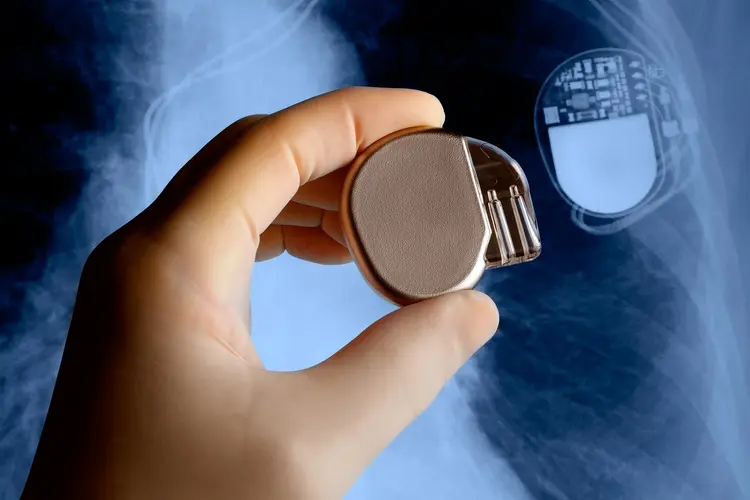
A pacemaker is a small, implantable device that helps regulate the heart’s rhythm. When the heart beats too slowly, irregularly, or pauses, this device sends gentle electrical signals to help keep the heartbeat steady. People receive these devices for many reasons, including certain rhythm disorders or symptoms such as fatigue and shortness of breath that relate to an abnormal pulse. Here’s information on pacemakers and how they work:
How Device Implantation Works
A pacemaker sits under the skin near the collarbone, with thin wires threaded through a vein into the heart. These wires sense the heart’s natural rhythm and deliver tiny electrical impulses when the heartbeat drops below a programmed rate. The device runs on a battery and contains a computer that holds information for your cardiology team to review during follow-up visits, including:
- Tracking Heart Activity
- Pacing Adjustments Made (Within Set Limits)
- Storing Rhythm Information
An automatic implantable cardioverter-defibrillator (AICD) also monitors the heart but has a different main purpose. While a pacemaker focuses on slow or irregular beats, an AICD detects certain dangerous fast rhythms. AICD systems deliver a shock or rapid pacing to restore a safer pattern. Some devices available combine pacing and defibrillation features in one unit, but your specialist can explain which type fits your diagnosis, lifestyle, and overall health.
Who They Can Benefit
Implantable devices are recommended after a detailed evaluation that may include an electrocardiogram, rhythm monitoring, imaging, and a review of symptoms. AICD is often discussed when there is a higher risk of dangerous rapid rhythms. A pacemaker is discussed when slow or irregular heartbeats are linked with dizziness, fainting, fatigue, or exercise intolerance. Before recommending any device, your cardiology team will assess your test results and medical history. They will talk you through the benefits, risks, and alternatives, keeping you informed about your management options.
How Is Recovery?
Recovery after implantation starts with a short hospital stay for monitoring and device checks. The incision near the collarbone is usually sore or tender for several days, and lifting, reaching, or pushing movements should be limited for a short period. Many people return to light daily activities fairly quickly; more strenuous tasks or exercise are phased in over time under medical guidance. Follow-up visits let your cardiologist review the incision, test the device, and adjust settings as needed.
Contact your specialist promptly if you notice increasing redness, warmth, or drainage at the incision site, or if swelling worsens. Also call if you experience new or stronger chest discomfort or any shortness of breath. Sudden shocks from an AICD, especially repeated ones, need urgent attention. If you ever feel that your symptoms are severe or rapidly getting worse, seek emergency care. You can inform your cardiology team of your emergency after you’ve reached a stable condition.
Work With a Pacemaker Specialist
If you have questions about irregular heartbeats or recent test results, schedule a consultation with a cardiologist for targeted advice. Working with a cardiology team that focuses on rhythm disorders helps you understand your device, your follow-up schedule, and any long-term restrictions. A specialist explains what routine checks are like for your heart condition and how to handle daily life and travel with an implanted device.
