


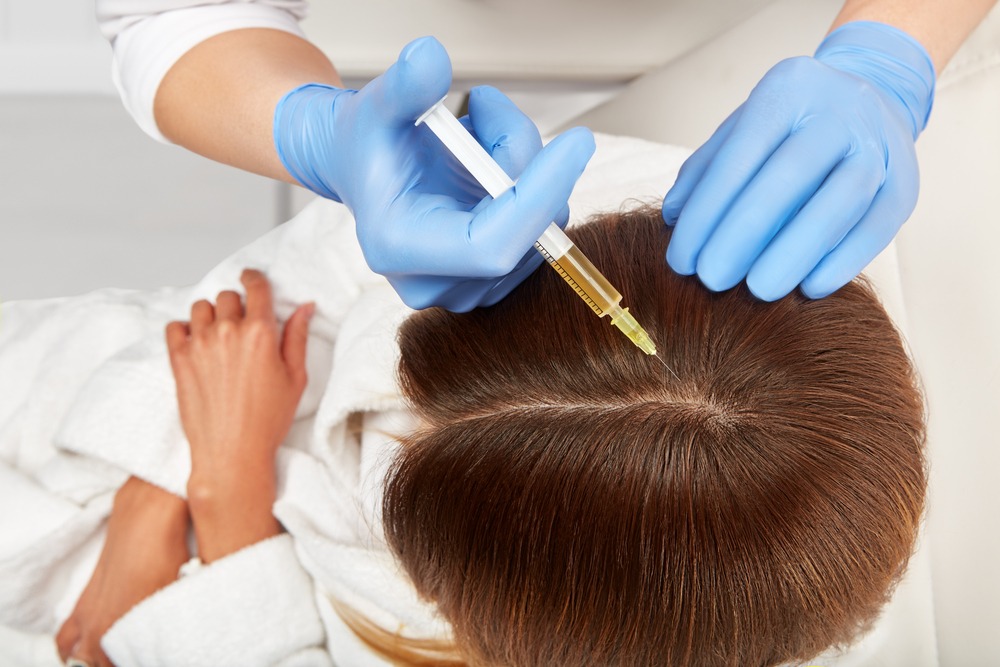
PRP (platelet-rich plasma) therapy is a non-surgical treatment for hair loss, and it uses concentrated plasma from a patient’s own blood to stimulate dormant hair follicles. Sessions are medically guided. They typically span multiple appointments, which are spaced several weeks apart to support results. Here is more information on PRP for hair loss:
What Is PRP for Hair Loss?
PRP stands for platelet-rich plasma, which is a concentrated component extracted from the patient’s own blood. Platelets carry growth factors. These proteins signal tissue repair and cellular regeneration, and when introduced to the scalp, they may reactivate follicles that have become dormant due to conditions such as androgenetic alopecia. PRP for hair loss uses biological material sourced from the patient receiving the treatment. This may reduce the risk of allergic reactions.
How Does It Work?
Blood drawn from the patient is placed in a centrifuge, which is a device that spins at high speed to mechanically separate blood into distinct layers. This separation process divides whole blood into red blood cells, platelet-poor plasma, and platelet-rich plasma. The platelet-rich layer is isolated, and it is subsequently prepared for reintroduction into the scalp.
Once injected, the concentrated growth factors in the PRP interact with stem cells within the hair follicles. This triggers biological responses that support follicular health, and it can extend the anagen (growth) phase of the hair cycle. Follicle miniaturization, which is the gradual shrinking of follicles that leads to thinner, finer hair strands, may also slow as a result. The treatment aims to support natural hair regeneration at the follicular level.
What Does a Session Involve?
A standard session begins with a blood draw from the patient’s arm, and the sample is processed in a centrifuge. Injections are administered directly into the areas of the scalp most affected by thinning or loss. Because hair loss patterns vary between patients, the clinician will identify and target the most affected regions to maximize treatment efficacy. Some treatment protocols recommend three sessions spaced four to six weeks apart, followed by maintenance appointments every 6 to twelve months.
What Are the Benefits?
PRP therapy presents several advantages over other hair loss interventions. Key benefits include:
- Reduced risk of adverse reactions: Because the treatment uses the patient’s own blood, it eliminates the risk of disease transmission or foreign-body reactions.
- Minimal side effects: Side effects are typically mild, and they may resolve within a few days.
- No significant downtime: General anesthesia isn’t required, and patients can return to daily activities the same day.
Know What To Expect
PRP therapy follows a clinical process designed to deliver growth factors directly to affected follicles; each stage, including blood draw, centrifugation, and injection, serves a specific function in the overall treatment. Familiarity with the process allows patients to approach sessions with informed, realistic expectations. If you are experiencing hair loss and are exploring your treatment options, speak with a qualified hair loss specialist. A thorough clinical consultation will establish a personalized treatment schedule and outline expected outcomes based on your hair loss history.
